


Strawberry Spinach Shower Soap
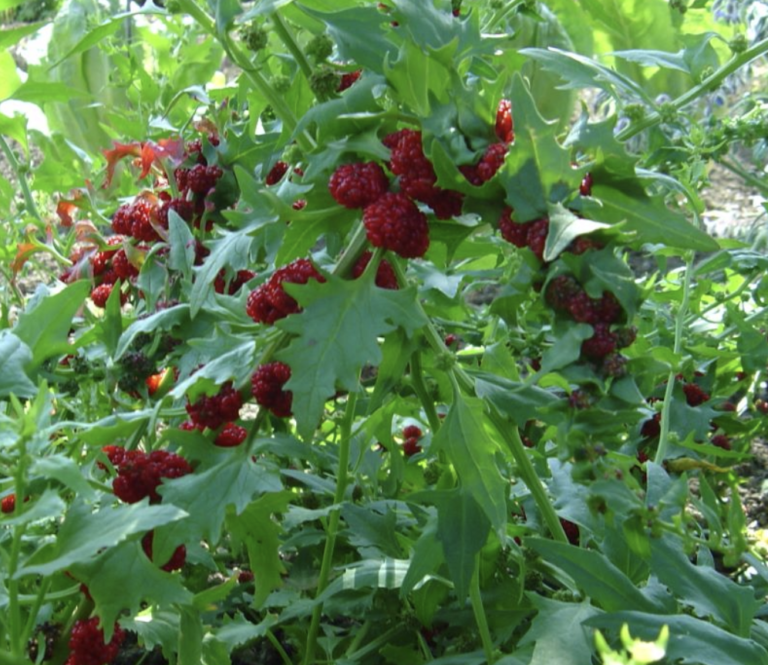
Like so many edible plants, strawberry spinach came to Europe with the discovery of the New World. For centuries, the indigenous peoples of the Americas used strawberry spinach in their cuisine.
Via Spain it entered our gardens in Central Europe in the 17th century.
Before cultivated spinach found its way into our vegetable gardens, this ancient amaranth species was common in many gardens and very popular as a leafy vegetable, as it is very undemanding.
Since cultivated spinach is not only much more productive and easier to harvest, this ancient crop fell into obscurity in the 19th century.
The word “strawberry” in the name refers to the red fruit clusters that this goosefoot produces. Although these are edible, they do not taste particularly good. However, they were often used as a natural dye for textiles or cosmetics, or simply for decorative purposes.
Cultivation
Since this plant, which is related to quinoa, is undemanding, it grows almost anywhere and is ready for harvest just four to six weeks after sowing.
In the kitchen
strawberry spinach is delicious both raw in salads and cooked.
It contains vitamins A and C and, like all leafy greens, provides important dietary fiber and minerals.
Unlike spinach, you have to pick quite a bit more strawberry spinach to gather enough leaves for a quiche, for example. A “shortcut” would be to simply mix spinach and strawberry spinach, combining two different leafy greens into something special.
Strawberry Spinach in Shower Soap
What motivates me to incorporate seeds of this ancient crop into one of my shower soaps?
Quite simply: I just want to send a message that diversity is enormously important for us and our environment.
Over the centuries, many small animals have specialized in certain plant species, whether as a food source or simply for their habitat.
The fewer different plants that grow here, the fewer insects find a habitat.
And the fewer insects that live here, the fewer birds, frogs, mulch, etc., can survive.
Plant it
Even if strawberry spinach doesn’t yield a huge harvest—it not only enriches the garden but also enables many tiny creatures to survive.
The “seeds” shower soap contains seeds of this goosefoot species and makes the soap slightly harder and more durable.
It’s in our hands
Given the climate challenges we will face in the future, it will be all the more important that we preserve as much diversity as possible in our fields.
Diversity builds resilience.
retour