


Dyer's woad in shower soap
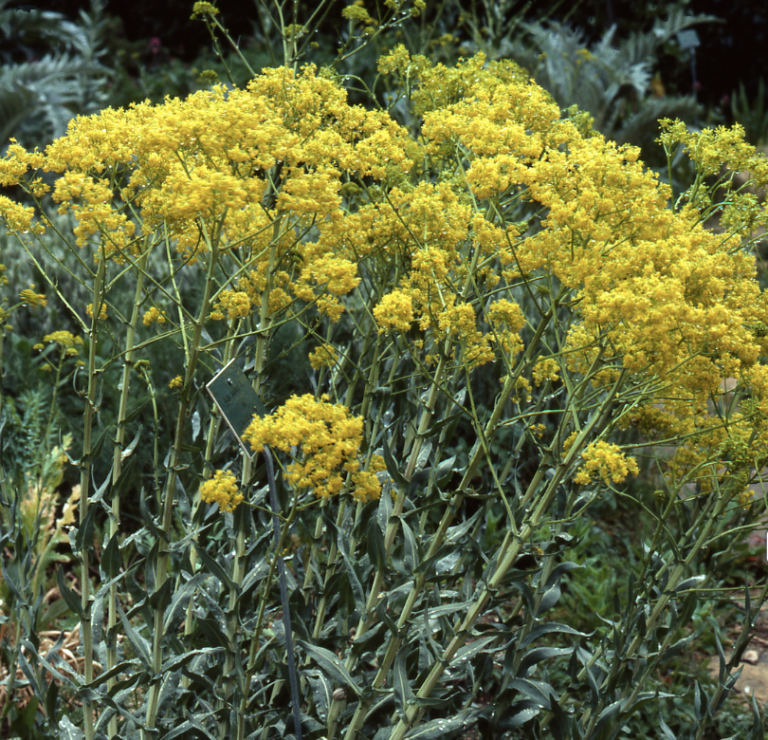
Alongside weld (yellow) and madder (red), woad (blue) was THE primary dye used to color textiles in Europe.
This was true from the 12th to the 17th century.
There were cities that not only became incredibly wealthy thanks to woad, but were actually referred to as “woad cities.” In Germany, these included Erfurt, Gotha, and Weimar; in France, Toulouse, Albi, and Carcassonne; in England, Lincoln and York were considered woad cities; and in Italy, it was Florence that served as the center of woad production in southern Europe.
In and around these cities, Isatis Tinctoria (woad) was cultivated, fermented, processed, and traded.
Fermentation
The fresh leaves of the woad plant do not yet contain a finished blue dye.
Therefore, the fresh, green leaves had to be harvested, pounded, and ground to create a moist, mushy plant mass (this breaks open the cells and activates the enzymes).
First stage of fermentation
The mass was then pressed into fist-sized bales, stored, and dried for several weeks.
Second stage of fermentation
The bales were ground again and mixed with water and alkaline substances.
These could include urine (urea → ammonia), wood ash, or plant ash.
The moist mass was then kept warm and stirred for a few days to maintain microbial fermentation, which uses enzymes to break down the substance “indican” into “indigo.”
However, the blue color only developed upon oxidation with oxygen!
It’s a very labor-intensive process before you actually hold indigo from the woad plant in your hands…
And today?
This once-important dye plant now leads a niche existence—at least in Europe. While there is a market for ecologically dyed textiles, it is small.
In contrast, in China, Isatis Tinctoria is still cultivated on a large scale today for use in traditional Chinese medicine.
Isatis Tinctoria in Shower Soap
The “Seeds” soap does not turn blue.
Unfortunately.
That would be a nice side effect of my initiative.
My goal is to encourage the users of my shower soap to grow plants from rare seeds.
Diversity leads to Resilience
Even though many “old” plants are less productive than new varieties, they are usually perfectly adapted to the local climate. They are often more resilient and hardier than new varieties.
AND old varieties often also serve as a food source for a wide range of microorganisms.
Without them, a whole range of insects would lose their habitat and disappear from the scene.
And when the insects disappear, the birds disappear too, since they can only feed their nestlings with freshly caught insects packed with fresh protein.
With something as tiny as a seed, we can make a big difference and bring about change.
It’s in our hands.
retour